 NZ
NZ
 AU
AU
 UK
UK

Security fencing plays an important role in protecting critical infrastructure such as railway networks, electrical substations, and public transport facilities. In these environments, fencing systems must not only provide reliable security but also withstand vandalism, harsh weather conditions, and long-term wear.
Glass Reinforced Plastic (GRP) security fencing has become an effective alternative to traditional steel systems in many infrastructure projects. In addition to its non-conductive properties, which are especially valuable in electrically sensitive environments, GRP fencing also offers excellent corrosion resistance and impact durability. These characteristics help ensure the fencing remains structurally reliable even in challenging outdoor conditions, including areas exposed to vandalism or graffiti.
Built to Withstand Impact
When subjected to strong impact forces, steel fencing typically absorbs energy and deforms, often bending or yielding under stress. This deformation can weaken the structure and lead to additional maintenance or repair requirements over time.
GRP fencing behaves differently. The reinforced glass fibres within the composite structure distribute impact forces more evenly, helping the material maintain its shape and structural integrity. This ability to absorb and disperse loads reduces the likelihood of permanent damage and contributes to a longer service life.
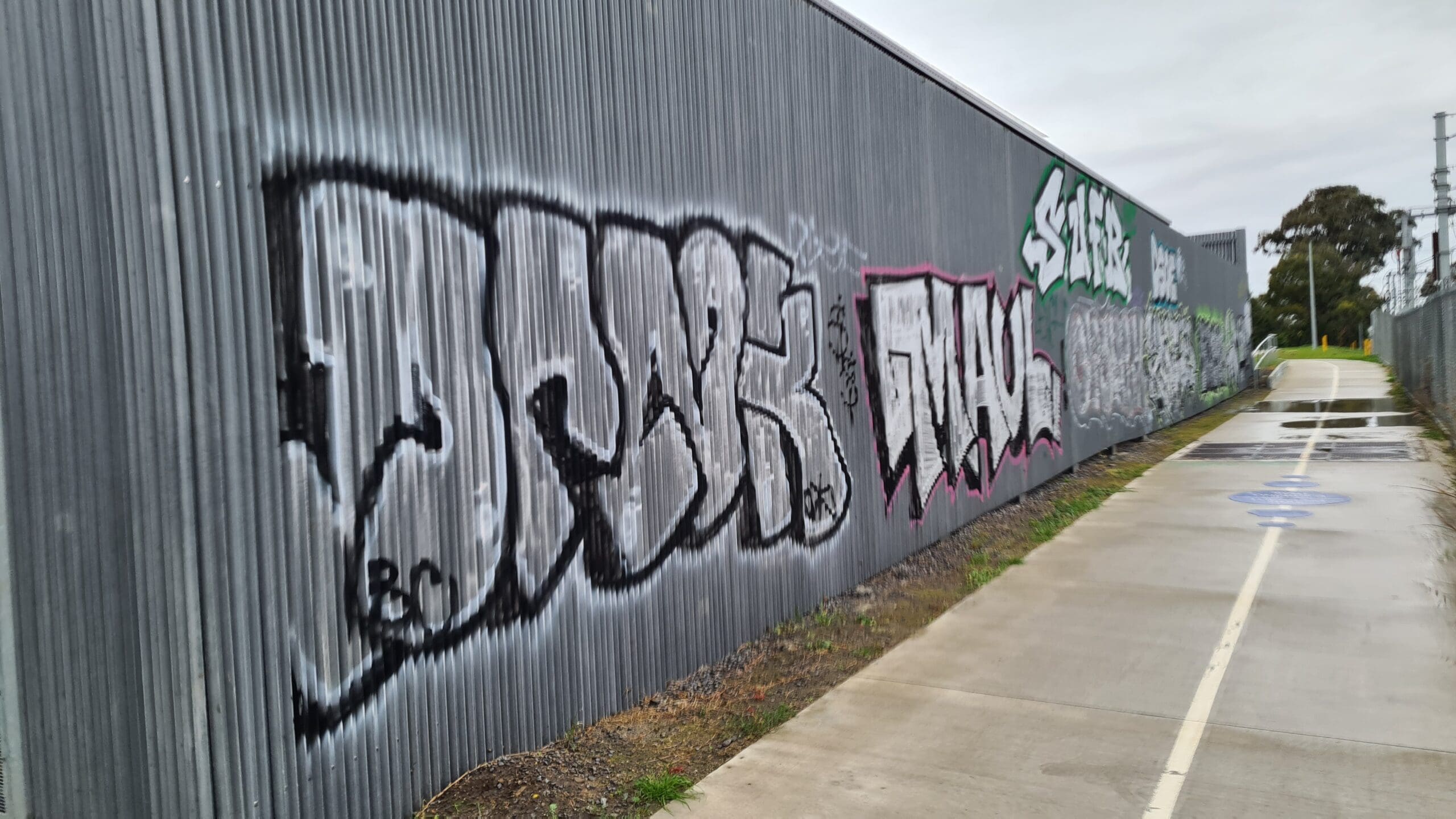
Clayton Substation, Melbourne
Resistant to Graffiti and Harsh Cleaning Chemicals
Another advantage of GRP fencing is its integral colour pigmentation. Unlike steel systems that rely on painted surface coatings, GRP products often have colour incorporated directly into the material during manufacturing.
This feature provides two key benefits:
Improved resistance to graffiti and surface damage
Tolerance to strong cleaning agents or paint removers used to remove unwanted markings
As a result, maintenance teams can clean or restore surfaces without damaging the structural integrity or appearance of the fencing.
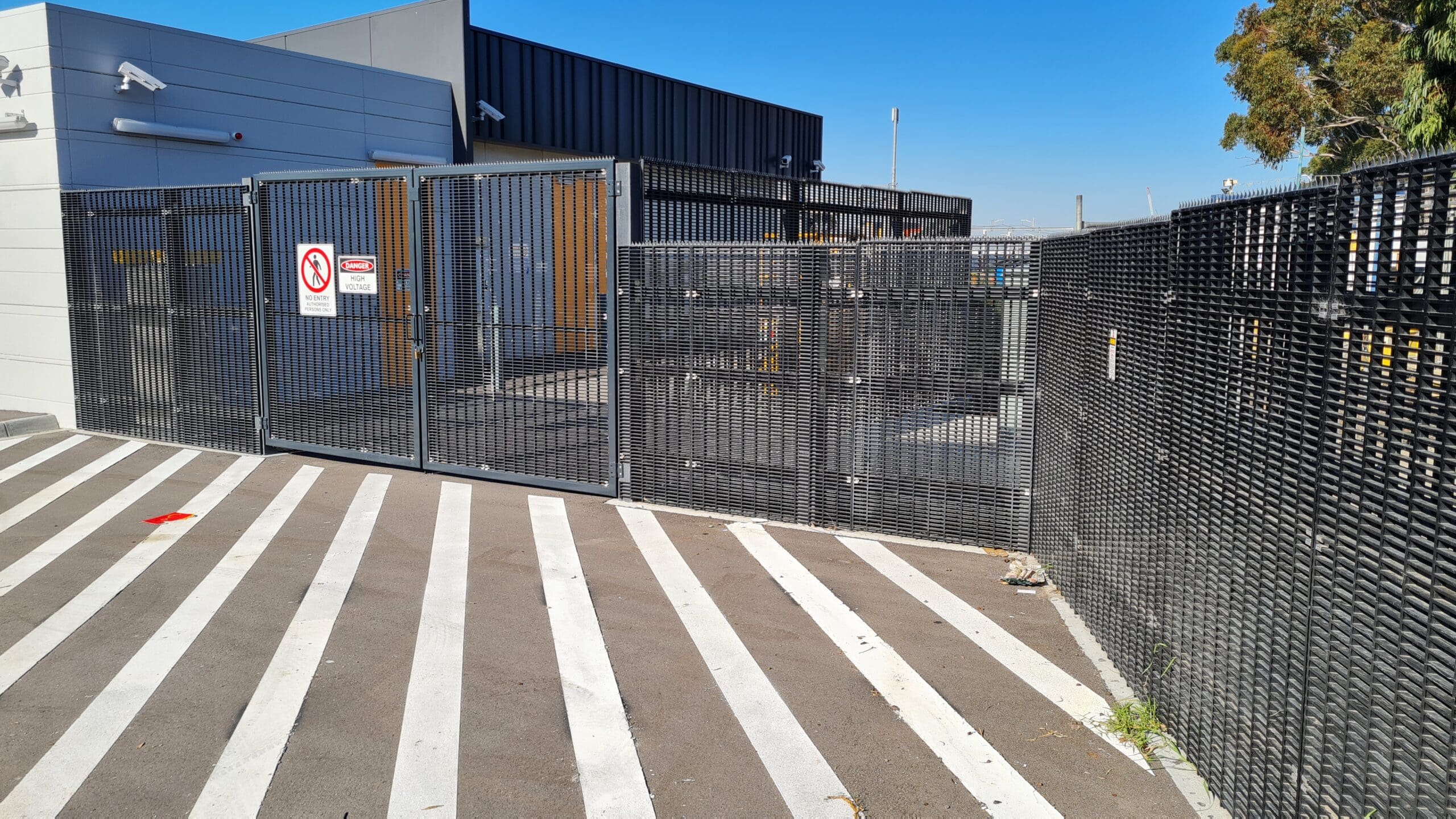
Sunshine Substation, Melbourne
Considering Lifecycle Costs
While steel fencing may sometimes appear to have a lower initial cost, the total lifecycle cost can be significantly higher due to maintenance, repainting, corrosion protection, and repairs.
GRP fencing offers several advantages that contribute to long-term value:
Longer service life compared to steel
High strength-to-weight ratio
Lightweight material that reduces transportation and installation costs
Minimal ongoing maintenance requirements
The lighter weight of GRP also means that less heavy lifting equipment and smaller installation teams are often required, helping reduce project costs during construction.
A More Sustainable Infrastructure Choice
GRP also offers environmental benefits when compared with many traditional materials. Its long service life, reduced maintenance requirements, and lower installation energy demands contribute to a smaller lifecycle environmental impact.
Combined with reduced transportation and installation emissions, GRP fencing can be considered a more sustainable solution for modern infrastructure projects.
For more information about GRP fencing and security screening systems, contact the Treadwell team to discuss suitable solutions for your infrastructure project.